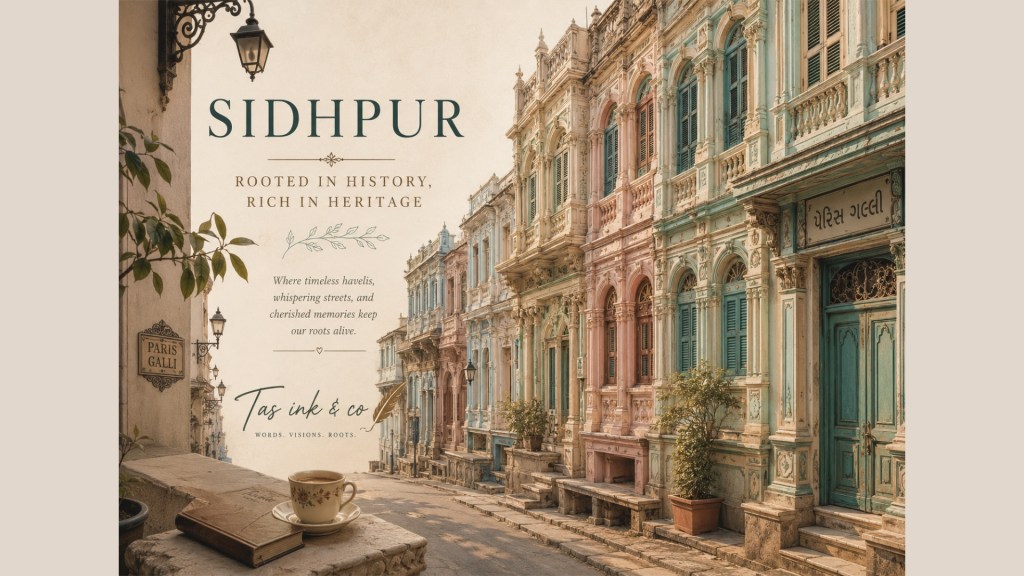
I wasn’t born in Sidhpur, but I hail from there – the small town in Gujarat that holds a special place in our family history, the place we visit every time there is a wedding, a festival, or any reason to maintain our connection to our roots. With every visit, it feels like travelling back to a history written long before my time.
Sidhpur is a small town on the banks of the Saraswati River in North Gujarat, 100 kilometres from Ahmedabad, in the Patan district. Before it was called Sidhpur, it was known as Shristhal, which gained prominence during the Solanki dynasty. It was King Jayasimha Siddharaja who renamed the town after himself and built one of the most famous monuments in Sidhpur, which still stands in ruins today. That monument is the Rudra Mahalaya Temple, a testament to its past glory.
But ask anyone who has visited Sidhpur without family ties there, and one thing becomes clear: the Dawoodi Bohra residences. Enter the old city, and it is completely transformed by the havelis lining its streets. These houses rise to three or four stories, painted in pistachio green, salmon pink, and baby blue. Their facades are a stunning blend of Art Deco, Gothic, and European Neoclassical architecture. Built nearly a hundred years ago by the trading families of Sidhpur’s Dawoodi Bohras, whose trade connections abroad exposed them to Victorian European architecture, these houses embody the wealth they brought back.
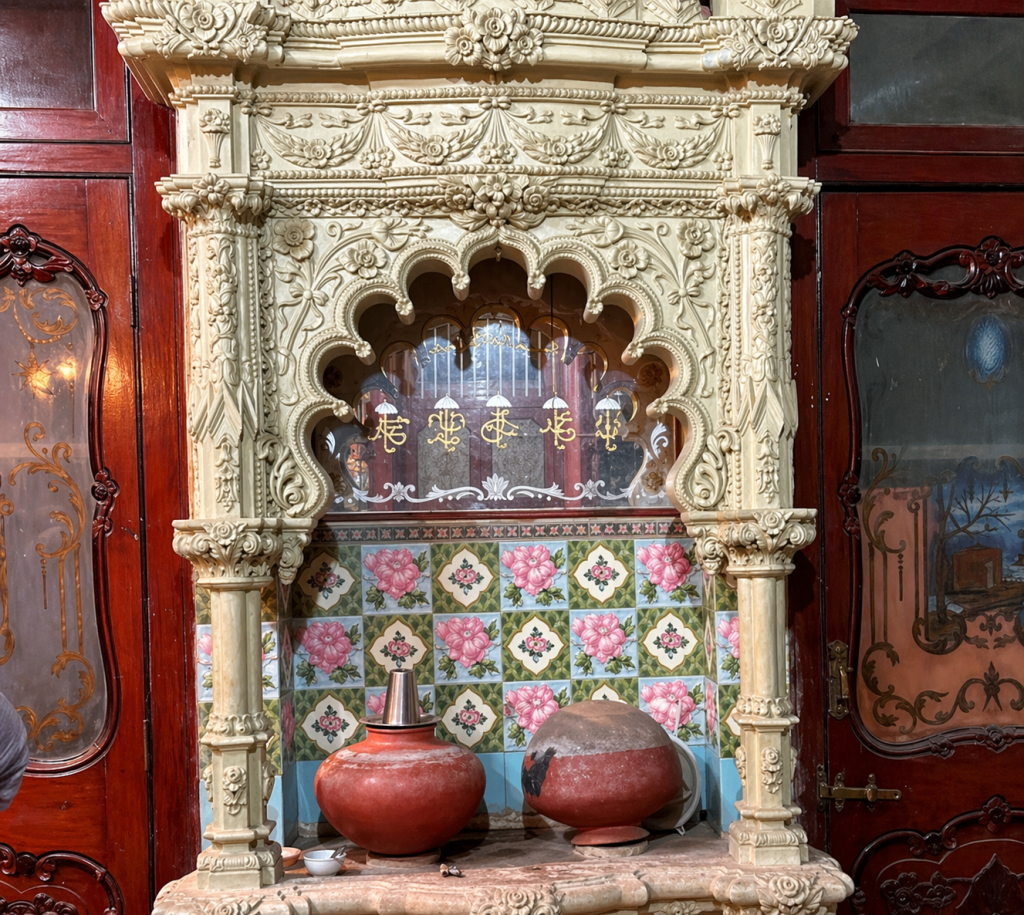
Observe the houses of the Dawoodi Bohras, and you’ll see that the design itself reflects trade routes: fluted pilasters and peaked roofs borrowed from Europe, coexisting so effortlessly with the otla, the raised front platform characteristic of Gujarati houses. The otlas were not just decorative; they served as gathering places where family members met after dark, neighbours exchanged tales, and children were called for meals. Some havelis are so famous they have their own names, including a legendary mansion said to have hundreds of windows. While that might be an exaggeration, it shows the grandeur these mercantile families brought back from afar.
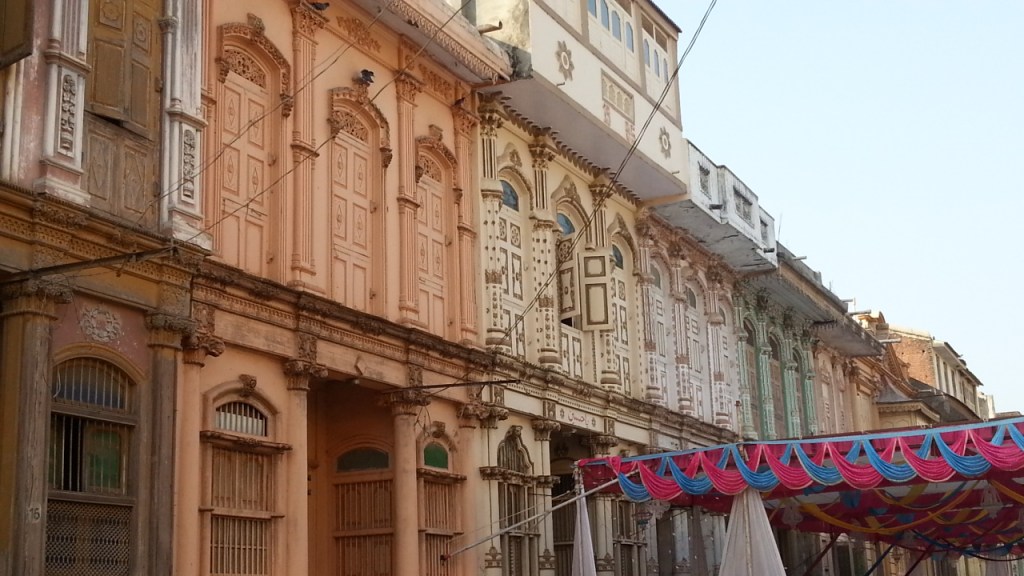
Most of these houses are now vacant, their Dawoodi Bohra inhabitants having moved to places like Chennai, Kolkata, Mumbai, Karachi, London, and elsewhere, returning home only occasionally or leaving their caretakers to look after the houses meant for generations of lively occupants. There is a nostalgic quality to all this – a town that reached the peak of its prosperity and craftsmanship but continues to preserve its history in secret, partially forgotten by the outside world. Locals still call one particularly grand street “Paris Galli.”
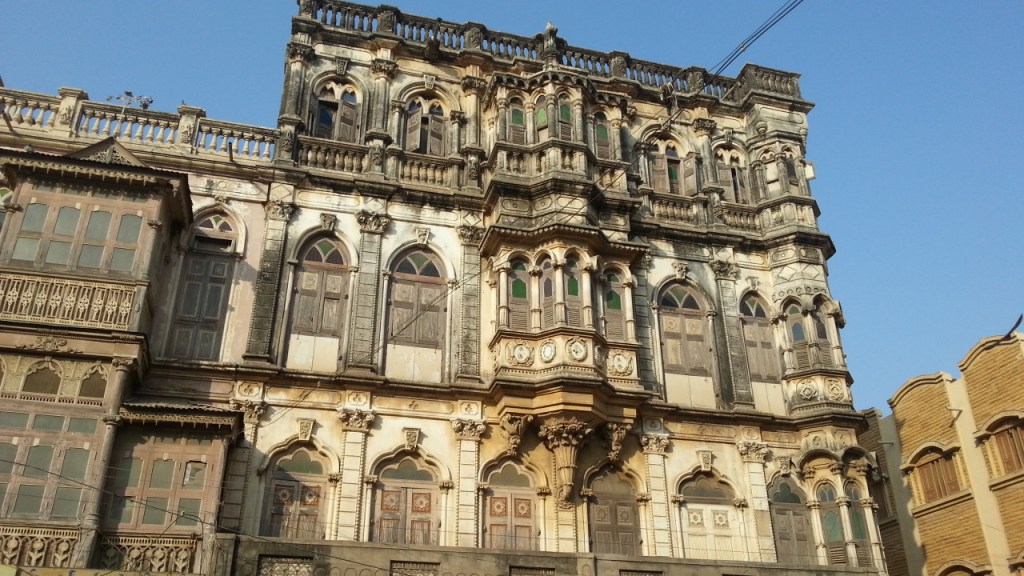
In my opinion, this is what Sidhpur is truly about. It is not merely a historical site, nor just my personal history; it is a living town with its own school holidays, weddings, and evenings at teahouses. But beyond that, it contains India’s unique architecture. Every visit makes me feel privileged — part of this place, belonging here despite never having lived here — connected through my very last name.
 Tas Ink & Co
Leave a comment